🌍 Introduction
Space tourism — once a dream only found in science fiction — is now becoming a real possibility. Companies like SpaceX, Blue Origin, and Virgin Galactic are already offering short trips to space for wealthy travelers. However, with ticket prices reaching hundreds of thousands or even millions of dollars, the question remains: When will space tourism become affordable for ordinary people?
🚀 The Current State of Space Tourism

Right now, space tourism is still in its early stages. Only a small number of people have traveled to space as private tourists, and most have paid between $250,000 and $55 million per trip, depending on the destination and company.
- Virgin Galactic offers suborbital flights (just a few minutes in space) for around $450,000 per seat.
- Blue Origin’s New Shepard provides a similar experience, with prices not officially announced but estimated to be in the same range.
- SpaceX, led by Elon Musk, has offered longer missions to orbit and even around the Moon — costing tens of millions of dollars.
These prices are far beyond what most people can afford, which means that space travel is currently limited to billionaires, celebrities, and researchers.
💡 Why It’s So Expensive

The main reason space tourism is so costly lies in the technology and safety required.
- Rocket launches consume massive amounts of fuel.
- Engineering and manufacturing spacecraft demand precision and expensive materials.
- Safety systems and training programs for passengers add to the overall cost.
Unlike airplanes, rockets are not yet mass-produced or reusable on a large scale — though that is changing.
⚙️ The Road Toward Affordability
The key to making space tourism affordable is reusability.
- SpaceX’s Falcon 9 and Starship rockets are designed to be reused multiple times, drastically reducing the cost per flight.
- Virgin Galactic uses reusable spaceplanes that glide back to Earth after each mission.
As companies continue to innovate and scale up production, prices are expected to drop significantly — just like how air travel became cheaper after decades of development.
Experts predict that within the next 20 to 30 years, suborbital space flights could cost $10,000 to $50,000 per person — still expensive, but possible for wealthy travelers or adventure enthusiasts.
🌌 The Future of Space Tourism
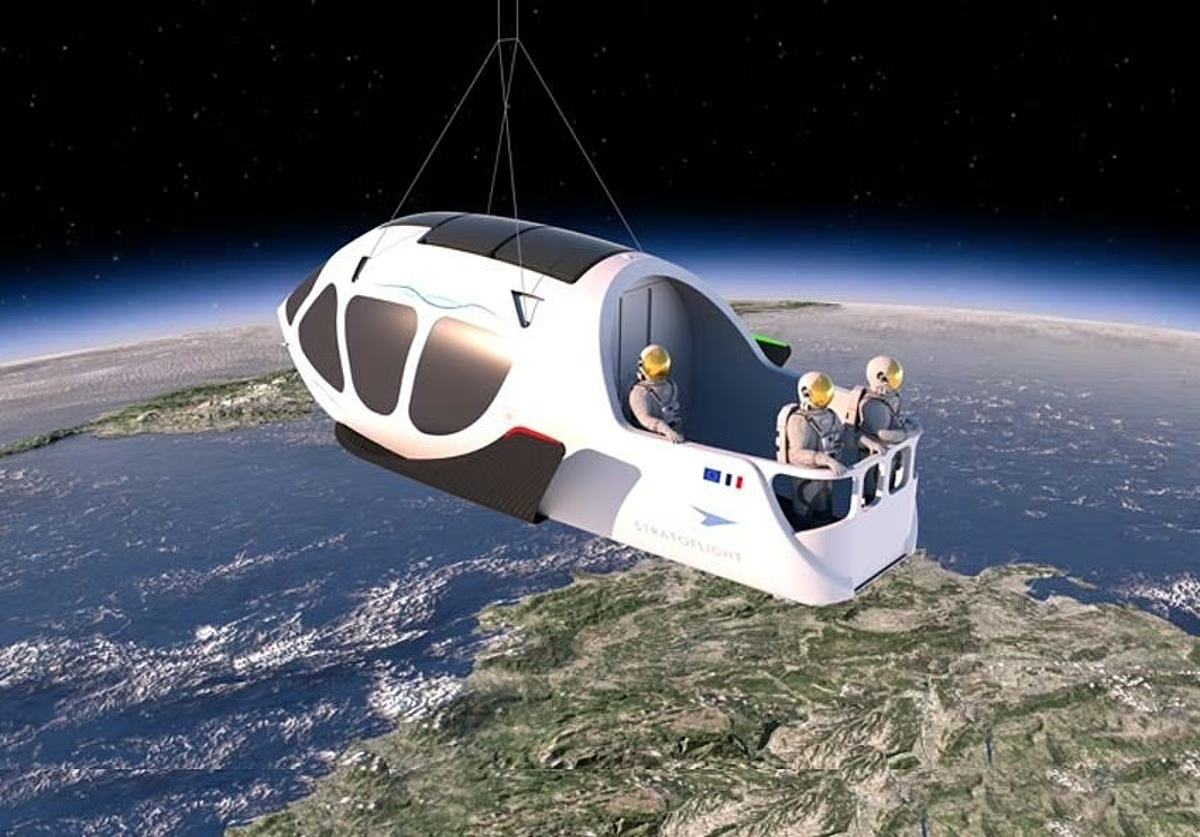
By the mid-21st century, space tourism may evolve into a regular industry — complete with space hotels, orbital stations, and lunar trips.
As technology advances and competition increases, costs will fall even further. Governments and private companies may also collaborate to make space travel accessible for educational and research purposes.
✅ Conclusion
Space tourism represents one of humanity’s most exciting frontiers. While it remains expensive today, ongoing technological progress — especially in reusable rockets and mass production — will make it increasingly affordable in the coming decades.
It may take until the 2040s or 2050s before middle-class travelers can buy a ticket to space, but one thing is certain: the era of space tourism has already begun, and it’s only a matter of time before we can all look down on Earth from the stars.